
Serialization and track-and-trace: preparing pharma supply chains for interoperable verification
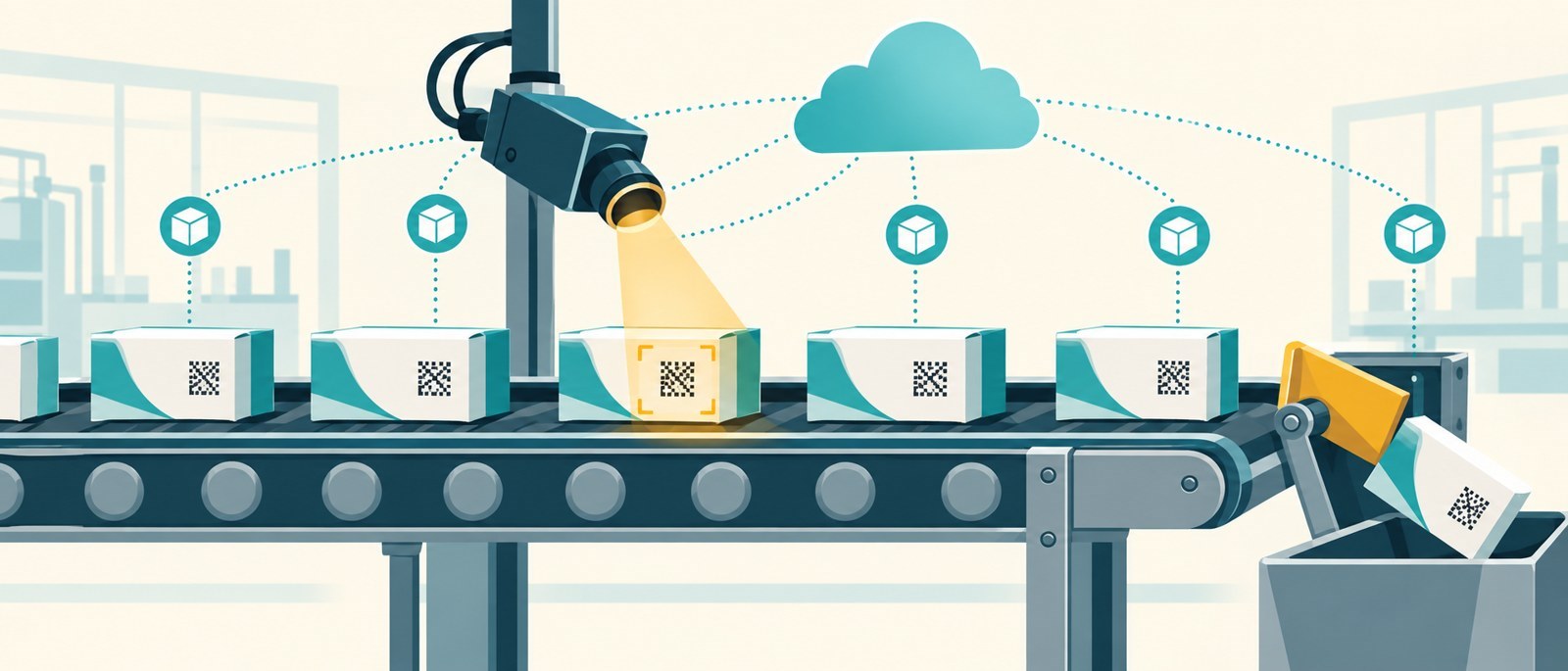
How the EU Delegated Regulation 2016/161, the US DSCSA and India's label code rules treat product identifiers, verification and data exchange, and how a manufacturer can phase a serialization programme, as of 27 November 2026.
A pack that can be scanned is not the same as a supply chain that can be traced. Serialisation puts a unique identity on each pack. Verification checks that identity against a record. Traceability follows what happened to the product between those points. Teams that treat the three as one project tend to buy a printer and then discover that the harder work is data. This article compares three frameworks: the EU Delegated Regulation 2016/161, the US Drug Supply Chain Security Act (DSCSA) and India's label code rules, and turns them into a practical implementation view.
Last reviewed: 27 November 2026. Passages marked as interpretation are the author's analysis. They are not requirements of either text. Both frameworks change through guidance, exemptions and national rules, so confirm the current position with the regulator before relying on a date or scope.
Four ideas that are often mixed up
Serialisation is giving each saleable pack a unique identifier. Aggregation is recording which packs sit in which carton, case or pallet, so that one scan of a higher-level code stands for many packs. Verification is checking an identifier against an authoritative record to see whether it is genuine and active. Traceability is the history of ownership and movement of the product. Delegated Regulation 2016/161 is built mainly around verification of a pack at the end of the chain. The DSCSA is built mainly around electronic exchange of transaction information between trading partners, plus verification. The overlap is the pack identifier, and the difference in emphasis shapes what a manufacturer has to build.
What the EU text puts on the pack
Under Regulation 2016/161 the unique identifier is a sequence that is unique to a given pack. It has five parts: a product code, a serial number of at most 20 characters, a national reimbursement or other national number where the Member State requires one, the batch number and the expiry date. The serial number must come from a deterministic or non-deterministic randomisation algorithm, and the chance of guessing it must be negligible and lower than one in ten thousand. The combination of product code and serial number must stay unique until at least one year after the expiry date, or five years after release for sale or distribution, whichever is longer.
Manufacturers encode the identifier in a machine-readable Data Matrix with error detection and correction equivalent to or higher than ECC200. The Regulation also requires the product code and serial number to be printed in human-readable form, so that a pack can still be checked if the barcode cannot be read. That requirement does not apply where the two longest dimensions of the pack add up to 10 centimetres or less. Where the pack allows, the readable data sits next to the barcode. Manufacturers must evaluate print quality against listed Data Matrix parameters, set a minimum quality that keeps the code readable through the supply chain, and not print below it. The packaging must not carry another visible two-dimensional barcode for identification and verification.
Verification and decommissioning in the EU
An identifier is authentic when the repositories system holds an active identifier with the same product code and serial number. Wholesalers verify at least products returned to them, and products received from a wholesaler that is not the manufacturer, the marketing authorisation holder or a designated distributor. A wholesaler must verify and decommission the identifier for products it intends to distribute outside the Union, returns that cannot go back to saleable stock, products intended for destruction and products requested as samples by authorities. A decommissioned identifier can be reverted to active only under strict conditions, including a limit of 10 days after decommissioning and the same authorisation and premises as the person who decommissioned it.
What the DSCSA asks for
FDA's September 2023 guidance states that the enhanced drug distribution security requirements under section 582(g)(1) take effect on 27 November 2023. Only electronic methods of product tracing are permitted from that point and verification is at the package level, unless a waiver, exception or exemption applies. FDA also issued compliance policies that created a one-year stabilisation period for the electronic systems, and it keeps a process for waivers, exceptions and exemptions that its web pages list by date. A manufacturer or repackager can ask for an exception where a package is too small to carry the required label information.
For data exchange the guidance recommends the Electronic Product Code Information Services (EPCIS) standard from GS1 to provide and maintain transaction information and transaction statements. FDA does not require one technical approach. It says trading partners may choose the approach that suits them if it meets the requirements, and it asks them to work together on the same standards. Because the guidance describes FDA's current thinking, its "should" is a recommendation. The statute and regulations carry the binding requirements.
India's requirements
India has so far framed serialisation as barcode and QR code rules for labels, and the Press Information Bureau (PIB) summarised them in August 2025. The Drugs Rules, 1945 were amended by G.S.R. 823(E) on 17 November 2022, in force from 1 August 2023. Manufacturers of the top 300 brands of drug formulation products listed in Schedule H2 must print or affix a bar code or Quick Response (QR) code on the primary package label, or on the secondary package label where the primary label has too little space. The code must store data that software can read to help authenticate the product. An earlier amendment, G.S.R. 20(E) of 18 January 2022, requires every active pharmaceutical ingredient manufactured or imported in India to carry a QR code on its label at each level of packaging, storing at least a unique product identification code, batch number, manufacturing date and expiry date, to support tracking and tracing.
The PIB note also says CDSCO published the notifications and guidance on verifying a drug's authenticity by reading the code. Interpretation: these rules cover label codes for specific product groups. The cited PIB note does not describe a pack-level repository like the EU's or an electronic exchange standard like the DSCSA's, so a manufacturer supplying India alongside the EU or US should treat the three as separate scopes and check the current CDSCO notifications for changes.
CDSCO's own questions and answers on G.S.R. 823(E) (dated 21 July 2023) add the detail. The code must carry eight particulars: a unique product identification code, the proper and generic name, the brand name, the manufacturer's name and address, the batch number, the date of manufacture, the date of expiry and the manufacturing licence number. The unique product identification code is decided by the manufacturer under its own standard operating procedure. The rule is mandatory for the 300 listed brands and applies to Indian and foreign manufacturers supplying them to the Indian market, and any batch manufactured on or after 1 August 2023 must carry the code whatever the location of the manufacturing site. If the primary label has too little space, the code may go on the secondary pack label. Imported products should preferably arrive already coded, but a code can be affixed in India after customs clearance with the licensing authority's permission under the Drugs Rules, 1945. A manufacturer may also code other brands voluntarily.
Interpretation: because the product code is each manufacturer's own choice, a company that sells in India and in the EU or US will probably run an Indian label code alongside, and not inside, its EU or US serial number scheme. The CDSCO answers do not say whether the two should share one data model.
Where the programme really sits
Interpretation: a line-level project has four parts that depend on each other. Master data comes first: every product code, pack type and market needs one clean record that packaging, quality and IT all trust. Line equipment follows: printers, vision systems that read each code and grade its print quality, and reject stations that remove packs that fail. Then comes the data layer that assigns serial numbers, records the link between packs and cases, and sends the events to partners and repositories. Last is exception handling: what happens to a pack that fails verification, a batch that is reworked, a return, or a recall.
A made-up scenario
This scenario is invented to show the sequence of decisions. It describes no real company. A mid-sized plant packs a tablet for two markets on one line. The packing team finds that the Data Matrix prints well on the carton but reads poorly after the carton passes a glued fold. The quality unit checks the print against the minimum quality the site set, finds that the grade is borderline on the fold, and moves the code away from the fold. A reject station removes about a dozen cartons from a trial lot. The team records each rejected serial number as not for sale, so that no rejected pack can be sent out by mistake. Later, a distributor returns a case. The returns team checks the identifiers in the case before deciding whether the packs can go back to saleable stock. Each step has an owner and a record, which is the point of the example.
Rework, returns and recalls
Rework is the place where serialised lines most often meet a manual process. Interpretation: before a site reworks a batch, it should decide what happens to the original identifiers, whether new ones are issued, and how the link between old and new packs is recorded. The same questions apply to returns. In the EU text, returned products that cannot go back to saleable stock are verified and decommissioned by the wholesaler. A recall depends on the same data: a team that can list the serial numbers of a batch and where they went can act faster than one that cannot.
A phased approach
Interpretation: a sensible order is to fix master data and the numbering scheme first, then qualify printing and vision on one line, then connect to the repository or partner systems, then add aggregation and exception handling, and only then widen to all lines and markets. Moving to the next phase should depend on evidence from the previous one, such as read rates and rejection records, not on a calendar date alone.
Where programmes tend to stumble (interpretation)
Interpretation: the sources cited here are rules and guidance, not surveys of programme failures, so this list is the author's reading of where the requirements above create work, not a finding about how often each problem occurs.
- Treating one market's rule as the template for all markets, when identifier content, human-readable data and verification duties differ between the EU text, the DSCSA and India's QR requirement for top brands.
- Printing codes that pass at the printer but are not checked against a defined minimum quality later in the line, as in the glued-fold scenario above.
- Leaving rework, returns and recalls until after go-live, when each needs a rule for what happens to the original identifiers.
- Assuming an exemption or exception will stay in place, when the FDA publishes DSCSA waivers, exceptions and exemptions on a page of its own that can change, and India's requirement is described by the sources above as still being implemented.
- Having no named owner for failed verification, so a rejected pack has no decision path.
Questions to ask before go-live
- Does each market's rule on identifier content, human-readable data and barcode position match the pack design?
- Is the minimum print quality defined, and does the vision system check against it?
- Who decides what happens to a pack that fails verification?
- Can the team list the serial numbers of a batch and show where they went?
- Which exemptions or exceptions apply, and who tracks changes to them?