
Biosimilars 2.0: analytical similarity, interchangeability and the next wave of complex biologics
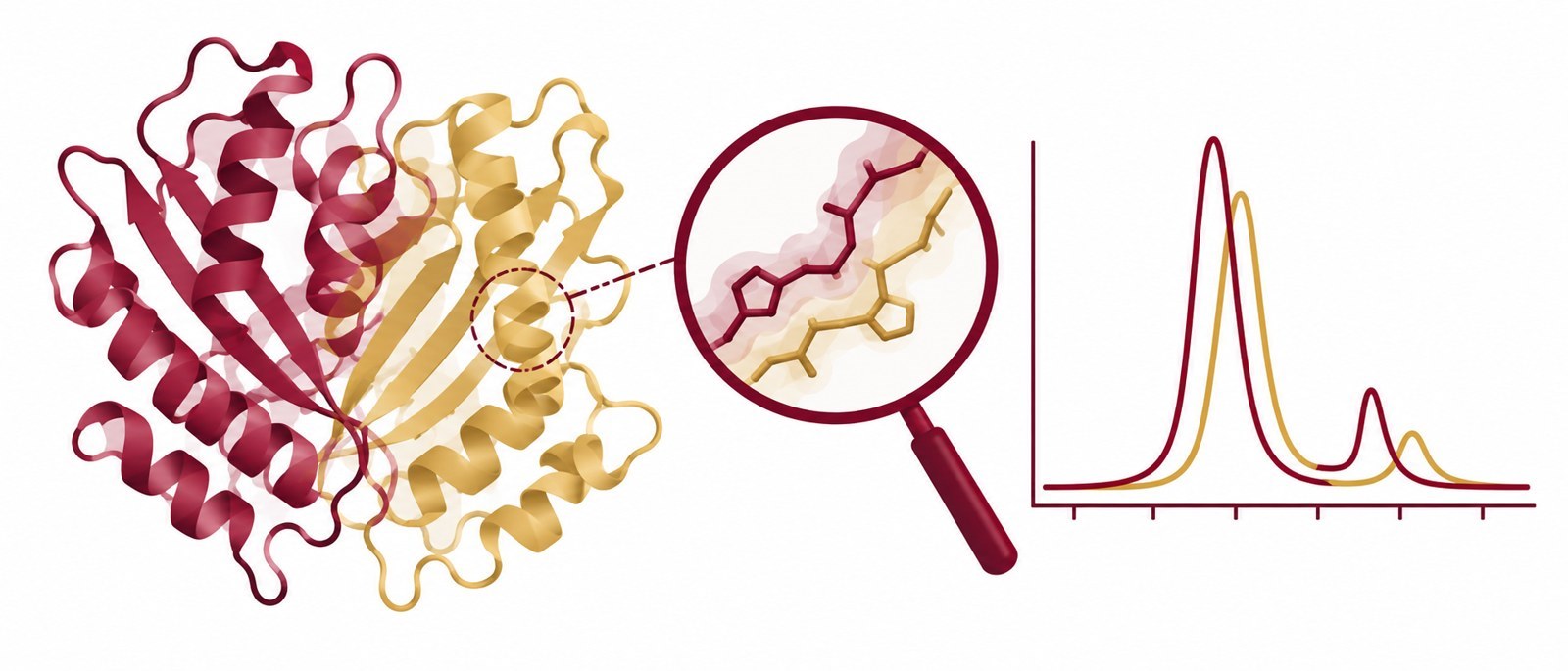
How FDA, EMA, WHO and CDSCO texts are shifting biosimilar evidence toward analytical similarity, and what that means for cell lines, comparability and interchangeability, as of 27 November 2026.
Biosimilar development has long been described as a clinical exercise: run a large head-to-head trial and show the copy performs like the original. The regulatory documents now point somewhere else. In the US, the EU, WHO guidance and India's 2025 draft, more weight is placed on analytical science, and the clinical package is being re-examined. For manufacturers, that moves the centre of gravity from the clinic to the laboratory and the plant.
Last reviewed: 27 November 2026. Several documents discussed here are drafts or reflection papers and are labelled that way. Passages marked as interpretation are the author's analysis, not regulatory text.
What a biosimilar is, and what it is not
The Indian CDSCO draft 2025 guideline defines a "similar biologic" as a biological product similar in quality, safety and efficacy to a reference biological product licensed or approved in India, or any innovator product approved in an ICH member country, and says "similar biologic" and "biosimilar" refer to the same thing. EMA describes a biosimilar as a biological medicinal product that contains a version of the active substance of an authorised original biological medicine, where similarity has been established through a comprehensive comparability exercise. Under US law as FDA describes it, the sponsor must show the product is highly similar to the reference product, notwithstanding minor differences in clinically inactive components, with no clinically meaningful differences in safety, purity and potency.
That is different from a generic. FDA's scientific considerations guidance explains that, unlike small molecule drugs, whose structure can usually be completely defined and reproduced, proteins are typically more complex and unlikely to be shown to be structurally identical to a reference product. It notes that proteins can differ in primary amino acid sequence, in modifications such as glycosylation, and in higher-order structure, and that even minor structural differences, including certain changes in glycosylation, can significantly affect safety or effectiveness.
Totality of evidence and the stepwise approach
FDA recommends a stepwise approach, with the sponsor assessing at each step how much residual uncertainty about biosimilarity remains and deciding what to do next. FDA says it will consider the totality of the evidence. The purpose of a biosimilar programme, in FDA's words, is to support a demonstration of biosimilarity, including an assessment of the effects of any observed differences, not to independently establish the safety and effectiveness of the proposed product.
The same guidance names the evidence blocks: structural analyses, functional assays, animal toxicity, human pharmacokinetics and pharmacodynamics, clinical immunogenicity and comparative clinical studies. It also states why manufacturing matters. Differences in the biological system used to make a protein may cause different post-translational modifications, which may affect safety or effectiveness.
The shift: analytical evidence carries more weight
- FDA (draft, October 2025). FDA's draft guidance on comparative efficacy studies (CES) says a comparative analytical assessment is generally more sensitive than a CES for detecting differences between two products. If the analytical assessment shows the products are highly similar, an appropriately designed human pharmacokinetic similarity study and an immunogenicity assessment may be sufficient, and FDA recommends sponsors consider a streamlined approach without a CES. It lists conditions for that approach: both products made from clonal cell lines, highly purified and well characterised analytically; the relationship between quality attributes and clinical efficacy generally understood and testable in the assays; and a feasible, clinically relevant human PK similarity study. FDA notes a CES may still inform the demonstration for some products, for example locally acting ones such as intravitreal products.
- EMA (reflection paper). EMA's reflection paper on a tailored clinical approach, first published as a draft on 1 April 2025 and shown with a 27 March 2026 current version, says comparative efficacy studies may not be required for well characterised biological substances where the analytical comparability exercise provides a more sensitive determination of biosimilarity, together with pharmacokinetic and appropriate safety studies. It is a reflection paper, not a binding rule.
- India (CDSCO draft 2025). CDSCO's notice of 6 May 2025 invites comments on revised guidelines that replace the 2016 version. They draw mainly on WHO TRS 1043, focus on strengthened orthogonal analytical tools and in vitro studies, and list next-generation analytical methods, in-house reference standards, an expanded list of in vitro studies, guidance on when in vivo animal studies are needed under the 3Rs principles, and statistical intervals for similarity ranges.
- WHO. WHO's 2022 guidelines on evaluation of biosimilars give globally acceptable principles for licensing biological products claimed to be similar to products of assured quality, safety and efficacy, and can be adopted by national regulators or used as a basis for national frameworks.
What the analytical comparison has to cover
FDA's scientific considerations guidance lists the comparisons that structural characterisation should generally include, using methods with adequate sensitivity and specificity: primary structure such as amino acid sequence; higher-order structure, meaning secondary, tertiary and quaternary structure, which the guidance says includes aggregation; enzymatic post-translational modifications such as glycosylation and phosphorylation; other variations such as deamidation and oxidation; and intentional chemical modifications such as PEGylation sites. It asks for extensive characterisation of both products across multiple representative lots, to understand lot-to-lot variability, and for the lots to support the clinical material and the to-be-marketed product.
Functional assays are a second layer. FDA says they can give added evidence that the biological activity and potency of the proposed product are highly similar to the reference product, and that the mechanism of action is the same where it is known. They can support the structural results, investigate the consequences of an observed structural difference and explore structure-activity relationships. FDA expects them to be comparative, so they can show similarity or reveal differences that current analytical methods cannot detect in structure. Sponsors are asked to discuss the limits of their assays, and the sensitivity, specificity and extent of validation of an assay can affect how much additional animal or clinical data is needed. Its example is that cell-based bioactivity assays may be used to detect the potential for cytokine release.
The guidance also says that the more comprehensive and robust the comparative structural and functional characterisation is, the stronger the scientific case for a selective and targeted approach to animal and clinical testing.
Interchangeability
In the US, interchangeability is a separate designation from biosimilarity. FDA's June 2024 draft guidance on demonstrating interchangeability describes considerations for switching studies, and FDA said it is seeking comment on a revised approach in which such studies will generally not be needed. It stated that, of 13 approved interchangeable biosimilars at that time, 9 were approved without additional clinical switching study data, and that both biosimilars and interchangeable biosimilars meet the same standard for approval. This is a draft, not a final position.
What this means for development and manufacturing
Interpretation: if analytical similarity becomes the main evidence, three capabilities decide whether a programme succeeds.
- Characterising the reference product. The strength of a comparative analytical assessment depends on enough reference lots and sensitive, orthogonal methods covering structure, glycosylation, function and impurities. A weak characterisation cannot be rescued by a clinical trial that FDA and EMA say is less sensitive.
- Cell line and process design. Because the biological system affects post-translational modification, cell-line choice and process control are not scale-up details. FDA's streamlined criteria name clonal cell lines and high purity directly.
- Controlling change. Process changes continue after approval. ICH Q5E says manufacturers frequently change processes for reasons such as improving the process, increasing scale and improving stability, and that the evaluation of quality attributes should show whether confirmatory nonclinical or clinical studies are appropriate. It describes four outcomes: products highly similar and comparable; methods not sufficient to see relevant differences; differences observed but justified as not adverse; and differences where an adverse impact cannot be excluded, which call for additional data. A biosimilar sponsor must therefore hold a comparability strategy for its own post-approval changes as well as for the original comparison.
Insulin and monoclonal antibodies, the two product groups the editorial brief names, sit differently. FDA's draft CES guidance points sponsors to separate FDA draft guidance on clinical immunogenicity for biosimilar and interchangeable insulin products (November 2019) for insulin. Interpretation: for a well characterised therapeutic protein made from a clonal cell line, a streamlined programme may be more realistic than for a locally acting product or a product whose quality-to-efficacy link is not well understood.
Do not assume the pathways match
The FDA, EMA, WHO and CDSCO documents above are not identical. Two are drafts (FDA's CES and interchangeability guidances and India's 2025 guideline), one is a reflection paper (EMA), and one is a WHO framework that national authorities adopt in their own way. A global programme needs a separate check against each target market's current text, including whether a draft has been finalised.
Illustrative scenario
This is a made-up example, not a named company. A developer plans a monoclonal antibody biosimilar for the US, the EU and India. It builds the comparative analytical package first, with enough reference lots and glycosylation and functional assays, then designs a pharmacokinetic similarity study and an immunogenicity assessment. Before any efficacy trial, it asks each regulator, in early advice, whether a streamlined package would be accepted.
Questions to ask before committing (interpretation)
- Is the reference product characterised with orthogonal methods across enough lots?
- Is the cell line clonal and the product highly purified, as FDA's streamlined criteria assume?
- Is a human PK similarity study feasible and clinically relevant for this product?
- Which of the planned market texts are drafts today?
- Is there a written comparability plan for post-approval process changes?
Related reading on Pharmaceutical Weekly: regulatory updates, resources and products.